The Ministry of the Environment is preparing amendments that will temporarily allow priority processing of certain permit applications in Regional State Administrative Agencies. This priority processing would concern permits for investments that support the green transition under the Environmental Protection Act (527/2014) and the Water Act (587/2011). In addition, administrative courts would handle appeals concerning projects and town plans central to the green transition as urgent. These expedited proceedings would be in effect during 2023–2027.
3.6.2022
Plan to speed up green transition investing by providing temporary priority processing and expedited appeals – statements can be issued


Kanerva Sunila
Related services
The goal of the amendments is to promote the green transition and the investments it requires by speeding up the processing of related permit applications and appeals.

Priority permit procedures
If a project promotes the green transition, related permit applications under the Environmental Protection Act and the Water Act would, at the applicant’s request, receive priority processing at the Regional State Administrative Agency, which means they would be processed faster.
The legislation would include a comprehensive list of the projects that would be eligible for prioritising over other permit applications under the Environmental Protection Act and the Water Act. Eligible projects would include projects concerning renewable energy and electrification of industry, manufacturing and utilising hydrogen, capturing, utilising and storing carbon dioxide, battery plants, and manufacturing, reusing and recycling battery materials.
Another prerequisite for priority processing would be that the applicant can sufficiently demonstrate that the operation takes into account the principle of ‘Do No Significant Harm’ (DNSH). The applicant needs to provide a written assessment of any significant risks to the environmental objectives of the EU Taxonomy Regulation ((EU) 2020/852) caused by the project (a so-called DNSH assessment). These objectives are climate change mitigation, climate change adaptation, the sustainable use and protection of water and marine resources, the transition to a circular economy, pollution prevention and control, and the protection and restoration of biodiversity and ecosystems. The reason for this assessment requirement is that priority processing is meant to be an incentive for realising investments that account for the DNSH principle.
However, the Ministry of the Environment’s proposal does not clearly state how, on the one hand, applicants should demonstrate compliance with the DNSH principle and, on the other hand, the authorities should verify this compliance. First of all, the proposal refers to the environmental objectives of the Taxonomy Regulation but does not make a reference to the regulation’s DNSH assessment. According to the reasoning, however, this assessment would be applied and the assessment criteria would correspond with the general DNSH assessment criteria of the Taxonomy Regulation. The proposal does not make a direct reference to the delegated regulations supplementing the Taxonomy Regulation that lay down the technical screening criteria. Second, applicants could also make use of the assessment for financing applications under the Union’s Recovery and Resilience Facility (RRF) if it can sufficiently demonstrate that the project takes the DNSH principle into account. The DNSH principle is based on the Taxonomy Regulation for RRF as well, but the European Commission has provided separate technical screening criteria for applying the DNSH principle for RRF. The Finnish Environment Institute has drafted a separate guidance on implementing the DNSH principle for measures under the Finnish recovery and resilience plan. Clarifying the proposal in terms of the applicable screening criteria would help both the applicants and the authorities. Unless this is done, there is a risk that the ambiguous screening criteria will create undue administrative burden for the applicants and lengthen the processing times, defeating the purpose of the amendments – the advancement of the green transition.
According to the proposal, in practice, the Regional State Administrative Agency would notify the applicant on its decision to prioritise the application’s processing. The applicant would not have the option to appeal this priority decision, and it could only be appealed in connection with the permit decision of the principal matter. Appealing the priority decision only after the matter is processed cannot be deemed efficient. In this respect, the proposal refers to the applicant’s option to re-request priority processing and to supplement the DNSH assessment during the procedure.
Regional State Administrative Agencies would implement priority processing as of the entry into force of the amendments until the end of 2025. Applicants could also request priority processing for permit matters that are already pending when the amended Act enters into force.
Handling appeals as urgent in administrative courts
Administrative courts would, by virtue of office, handle as urgent any appeals that concern expedited permit decisions under the Environmental Protection Act and the Water Act and that received priority processing by the Regional State Administrative Agency. This would ensure that permit matters would be treated as a matter of urgency both during permit processing and in connection with any appeals, thus speeding up the overall process. However, the proposal does not address how the administrative courts would account for the right to appeal the Regional State Administrative Agency’s decision on priority processing.
The amendment being drafted would also include new provisions to the Land Use and Building Act (132/1999) concerning appeals on town plans considered significant for the production of renewable energy and local master plans guiding the construction of wind power. Administrative courts would handle these appeals as urgent.
The urgent handling of applicable appeals would be in effect in administrative courts as of the entry into force of the amendments until the end of 2027.
Statements to the amendments can be issued
Statements to the amendments under preparation can be issued until Tuesday 7 June 2022.
The amendments are scheduled to enter into force on 1 January 2023.
Authors: Matias Wallgren, Sanna-Mari Seppälä, Kanerva Sunila and Laura Aitala

Latest insights
Article published 8.5.2026 – Environment, Energy & Green Transition
Reform of Finland’s land use legislation – key takeaways for project developers


 Article published 2.3.2026 – Environment, Energy & Green Transition
Energy security is a matter of investment and competitiveness
Article published 2.3.2026 – Environment, Energy & Green Transition
Energy security is a matter of investment and competitiveness
 Article published 6.2.2026 – Tax & Structuring
Electricity sector Profit Tax Act in conflict with EU law – SAC denied leave to appeal
Article published 6.2.2026 – Tax & Structuring
Electricity sector Profit Tax Act in conflict with EU law – SAC denied leave to appeal

 Article published 16.12.2025 – Environment, Energy & Green Transition
Parliament approves substantial increases in tax on mined minerals
Article published 16.12.2025 – Environment, Energy & Green Transition
Parliament approves substantial increases in tax on mined minerals

Tarja Pirinen, Marius af Schultén & Joel Aartolahti
Samuli Tarkiainen & Marius af Schultén
Janne Juusela & Mikko Alakare
Tarja Pirinen, Mikko Alakare & Noora Ahonen
Latest references
Oomi Solar – Sale of a Solar Power Plant and Battery Energy Storage Project
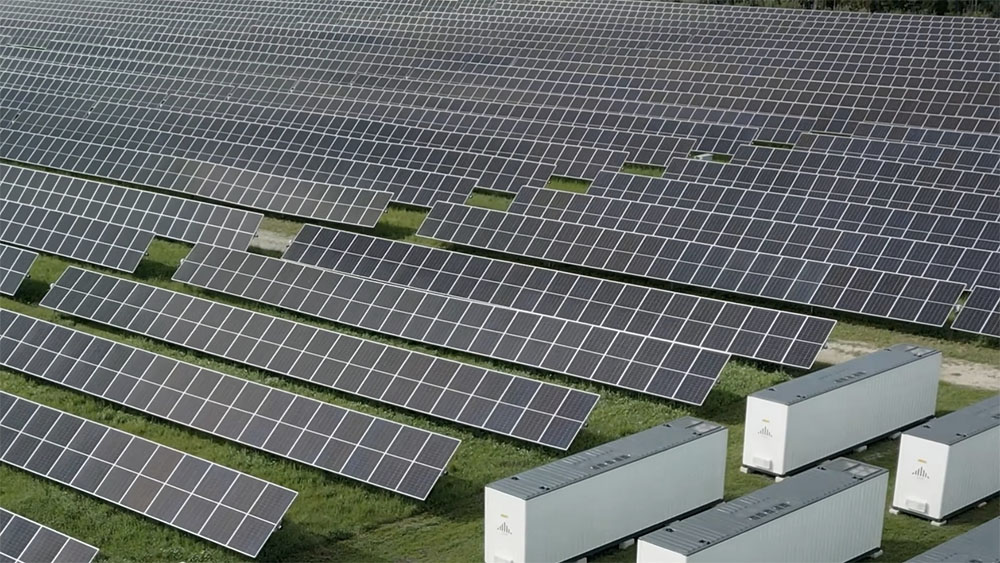
We advised Oomi Solar Oy on the sale of a solar power park and battery energy storage project to Tuulipolar Oy. The transaction concerned a 24 MWp solar power plant and a 36 MW / 70 MWh battery energy storage system (BESS) to be constructed in Tornio. Tuulipolar Oy will act as the owner and operator of the plant, while Oomi Solar Oy will be responsible for its design and construction. The project will form the world’s northernmost industrial hybrid power plant, contributing to Finland’s green energy transition by increasing renewable energy production and electricity storage capacity in Northern Finland. The hybrid solution enables optimization of production as well as active participation in electricity markets and reserve services, improving the project’s profitability and supporting the balance of the electricity system year-round. Electricity production from the hybrid plant is expected to begin in 2028. Oomi Solar Oy is a Finnish renewable energy expert with experience from nearly 200 MW of installed solar capacity. The company helps businesses and communities accelerate the green transition by offering comprehensive solutions, including solar power plants, energy storage systems, and related lifecycle services from project development to maintenance. Oomi Solar Oy employs more than 20 energy professionals and delivers solar power projects across Finland. The company’s vision is to be Finland’s most desired partner for solar energy and energy solutions.
Case published 5.6.2026

Nscale – Data centre project
Castrén & Snellman advised Nscale, a European AI infrastructure company, in connection with its planned data centre project in Harjavalta, Finland. The facility will be located in the Sievari industrial area. Castrén & Snellman’s advisory role encompassed the negotiation and execution of a site securing and development agreement (SSDA) with Fortum, as well as the preliminary land sale process for the Sievari site with the Town of Harjavalta. Under the SSDA, Fortum supports the advancement of Nscale’s project development, including grid connection design and permitting.
Case published 15.4.2026

Downing – Acquisition of the entire share capital of Tornionlaakson Voima
We advised UK-based investment company Downing in its acquisition of the entire share capital of Tornionlaakson Voima Oy. Tornionlaakson Voima owns three hydropower plants in the Tengeliönjoki river system – the Portimokoski power plants in Ylitornio, the Jolmankoski power plants in Raanujärvi and the Kaaranneskoski power plants in Sirkkakoski. The power plants produce a total of approx. 45 gigawatt-hours of electricity per year. Tornionlaakson Voima’s daily operations will continue normally, and the transaction will not affect customers. The consummation of the transaction is subject to the approval of the Ministry of Economic Affairs and Employment. Downing has over 35 years’ experience in providing a wide range of investment solutions to the needs of institutional investors, advisers and retail investors. The company manages over £2 billion in assets in both the private and public markets and its current hydro power portfolio includes approx. 50 hydro power plants in the Nordics.
Case published 27.3.2026
Terrafame – Environmental and water management permit processes concerning the company’s entire operations and the KL1 side rock area
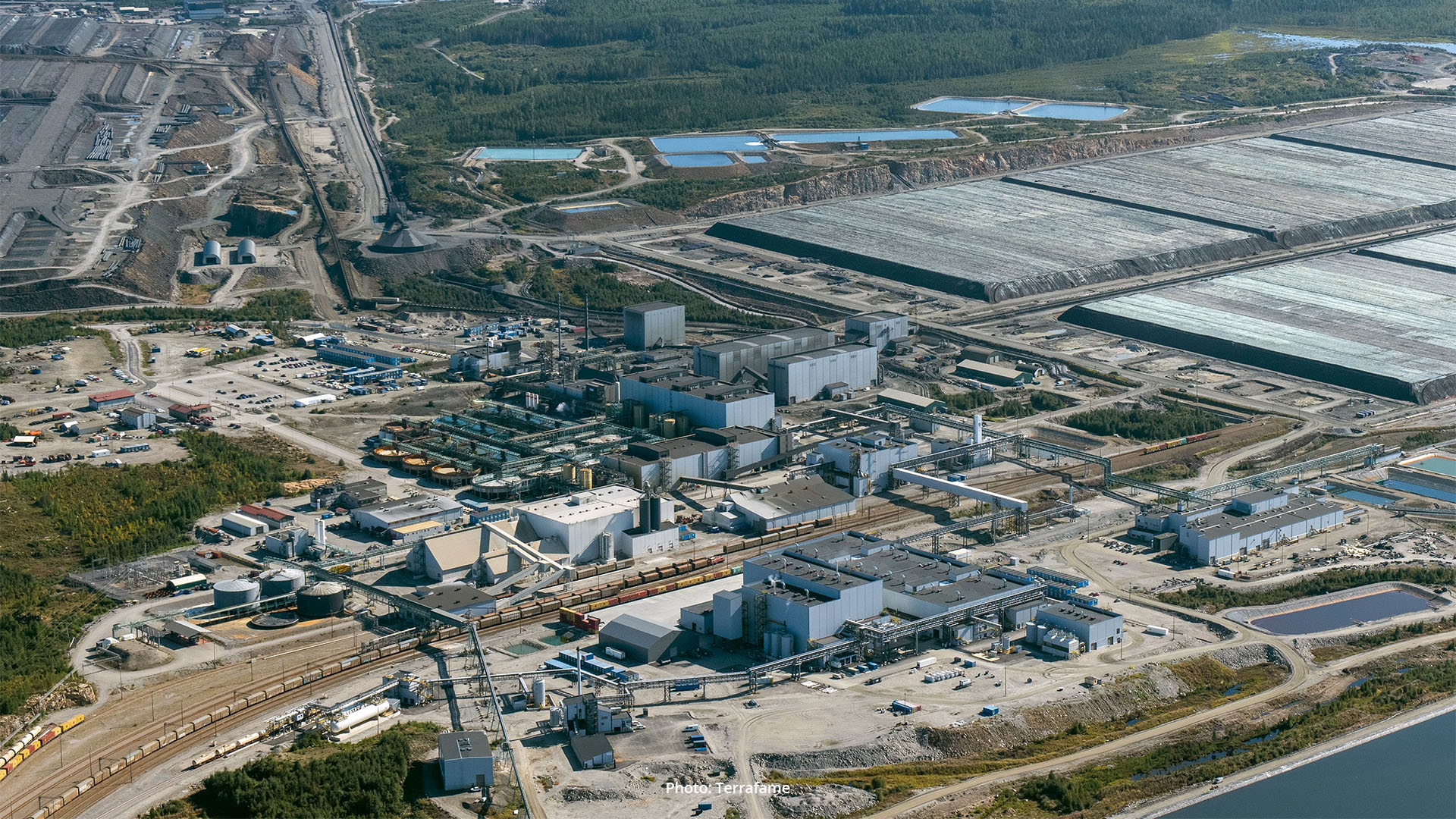
Castrén & Snellman successfully assisted Terrafame Ltd in environmental and water management permit processes concerning the company’s entire operations and the KL1 side rock area, on which the Supreme Administrative Court issued its decision on 12 February 2026 (KHO 366/2026 and 367/2026). The changes made to the decisions of the Vaasa Administrative Court as a result of Terrafame’s appeals, enable the company to implement its new strategy and develop its operations as planned. The decisions of the Supreme Administrative Court brought the nearly ten-year-long permit process to a close.
Case published 20.2.2026